How Pre-Inspections Can Prevent Problems for Carriers

By Steve Binkley, InfoStream Safety Consultant
The purpose of conducting pre-trip inspections is to increase safety on roadways. Safety is so important that the Federal Motor Carrier Safety Administration (FMCA) requires truck drivers to perform a pre-inspection before each trip, using a driver vehicle inspection report (DVIR).
It’s the carrier’s responsibility to ensure drivers are completing pre-inspections. If violations are found by inspectors in a roadside check, carriers can be issued fines and trucks taken out of service until repairs have been made. Preventive steps taken now can save time and money later.
Quality of Pre-Inspections Are Important
Pre-inspections are more than just a simple walk around. I’ve watched hundreds of drivers perform pre-trip inspections, and most of them do a thorough job. However, I’ve seen a number of drivers who never get out of their truck after a rest period. Instead, they put the truck in gear and take off.
Here are nine ways to perform an effective pre-trip inspection to ensure consistent compliance to FMCSA regulations:
- Keep truck cab clean. This isn’t a pre-trip inspection requirement, but as a former trooper who’s performed more than 15,000 Department of Transportation (DOT) roadside inspections, I know officers are more likely to inspect trucks that don’t appear as they should.
Maintain a clutter-free dash and make sure the floor is clear of debris. Fuel stops or rest breaks are excellent times for drivers to empty trash that may have accumulated in the cab. While it may not seem like much, the perception of being organized and prepared can make a difference with inspectors. - Remember the BLT. Not the sandwich, but the three most common defects: brakes, lights and tires. Defects in these areas are assessed heavy Compliance Safety and Accountability (CSA) points when violations are documented on a DOT inspection. High CSA scores can negatively affect carriers’ vehicle maintenance Behavior Analysis and Safety Improvement Categories (BASICs) and the drivers’ pre-employment screening program (PSP) report.
- Monitor fluid levels. Look for leaks in oil, water and power steering fluid.
- Listen for air leaks. Perform this test when the air system isn’t charged and the brake is applied.
- Locate fire extinguisher. Is it charged? Expired? Do drivers know how to use it? Are emergency triangles in the truck as well?
- Examine the suspension. Look for defects, such as faulty air bags or springs. Make sure the trailer’s tandem locking pins are locked in place.
- Check wheels and lug nuts. Are treads worn? Lug nuts loose, missing?
- Test the steering. Watch for looseness and play. Do the steering parts ‘pop’ when the steering wheel is turned?
- Review documents. While this isn’t a pre-trip inspection requirement, it’s still important. Drivers should understand their permit book and other related paperwork. They need to know the purpose of each permit and any applicable expiration date.
Plan now, Prevent Problems Later
Pre-trip inspections are one of the essential responsibilities commercial truck drivers have. Making sure their vehicle is operating correctly increases safety of the public as well as themselves.
While no mandatory minimum time is required to complete a pre-trip inspection, a quality inspection may take up to 30 minutes. While that amount of time may seem excessive or unnecessary, violations, vehicle breakdowns and accidents are more costly. That’s why managing inspections and DVIRs is a critical role of carriers.
Like many things we do, planning is important to being successful and performing the pre-trip inspection is no different. Be safe!
More on safety & compliance.
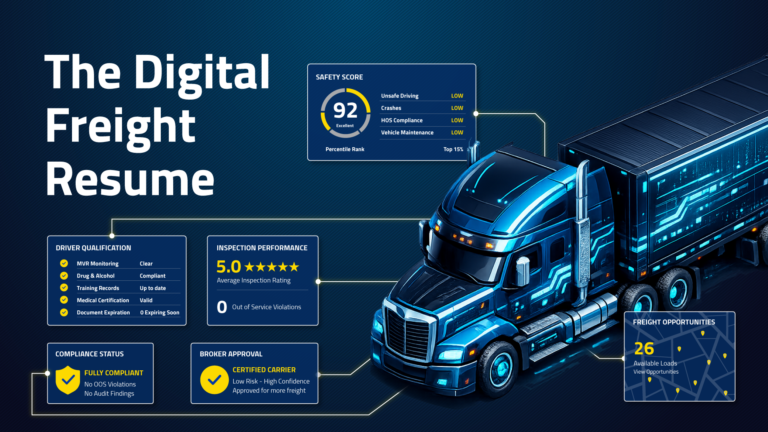
Your Safety Data is Now Your Resume for Freight
TL;DR: The Supreme Court’s Montgomery v. Caribe Transport ruling has changed how brokers evaluate carriers, putting safety performance and compliance under greater scrutiny…

AI & RPA For The Transportation Industry Power EBE’s FY25 Revenue Increase
EAST MOLINE, IL – EBE Technologies, the leading provider of enterprise Artificial Intelligence (AI) and Robotic Process Automation (RPA) developed for the…

Creating a Truck Driver Retention and Engagement Program
A 2023 survey by the NPTC estimates the average cost of driver turnover is $9,748. During a freight recession, it’s vital for…
Reading about it’s the easy part.
If something here describes your operation, we’ll show you what it looks like fixed, using your own volumes rather than an example.