AI that moves recruiting forward.
EBE ATS combines AI-powered recruiting with transportation-specific applicant tracking to help your team find, qualify, and hire drivers faster.
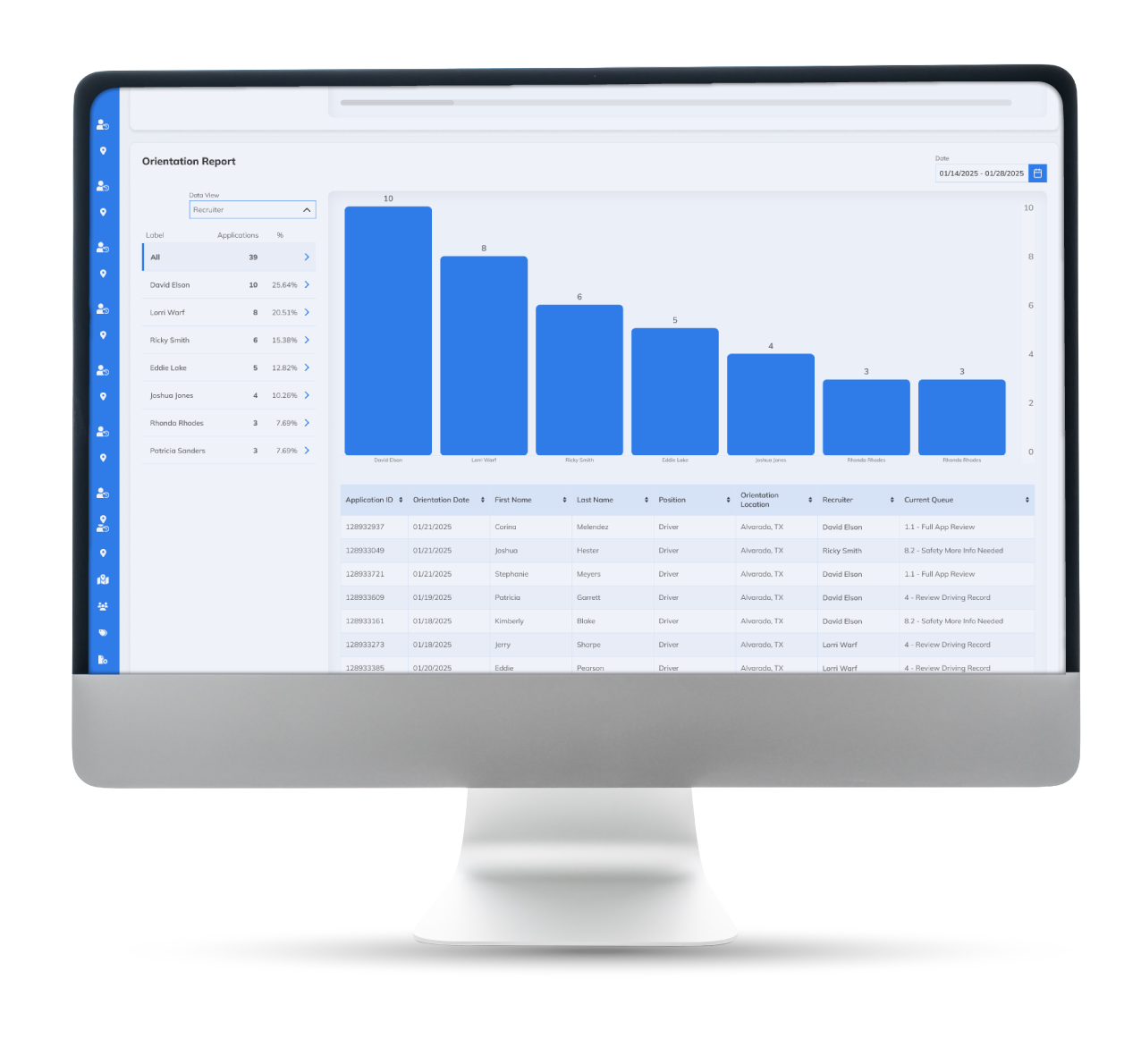
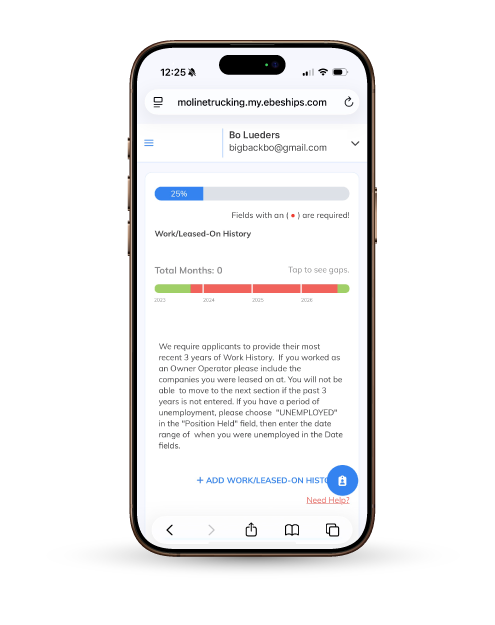
A traditional ATS tells you where the applicant is. EBE tells you what to do about them.
An application arrives after the office has closed. By the time anyone is back at a desk it has been scored against the drivers you actually hired, the driving record has been ordered and read, and anything with a problem in it is flagged with the reason written next to it. Most systems do one side of that or the other. Doing both is what puts the right driver at the top of the list before the first call of the day.

Not a template. The profile is built from the drivers you hired over the past year, plus whatever criteria you added to it.
EBE ATSThe first check goes out on its own, through the MVR provider you already hold a contract with.
EBE ATSThe result is read against your prompts. Reckless driving, speeding patterns and anything a safety director would want flagged gets flagged.
EBE ATSThe list is sorted, the reasons are written down, and the flagged ones are routed to someone. Every hiring decision is still yours.
Your recruiter- Who fits the drivers we have actually kept
- Who should I call first this morning
- What should I know before I pick up the phone
- Which application is going cold while I work
- What is missing from this file
- What came back that does not match
- What report or document are we still waiting on
- What can EBE handle without asking me
Let recruiters recruit.
Not what the software does — what the department looks like once it is running.
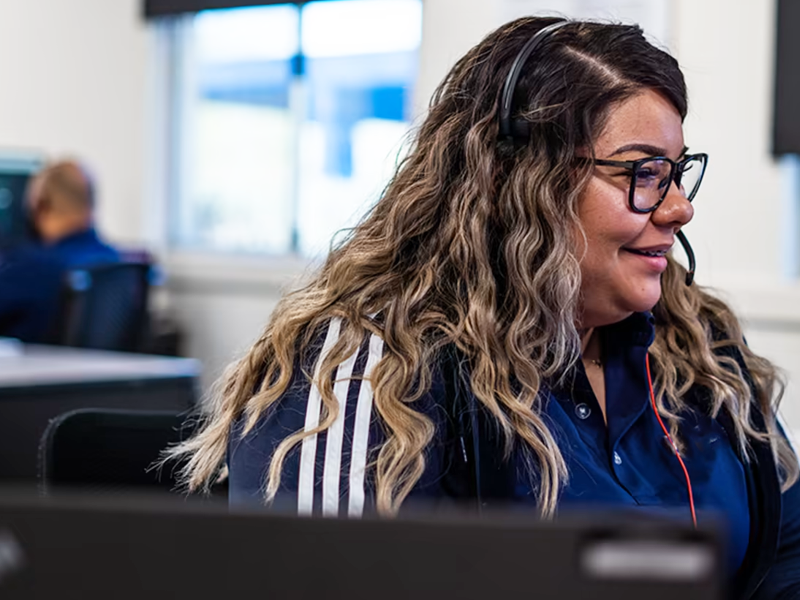
The best one that arrived after hours is at the top of the list, screened, before anyone sits down.
Not in portals. The ordering, the collecting and the reading all happen without them.
Time in status, by recruiter and by position — the number a director gets asked for on a Monday.
A hire arrives at safety as a record with the qualification documents already attached.
All of it, ordered from inside the application. MVRs, PSP reports, Clearinghouse queries, background checks and drug screens are ordered from the vendors you already have contracts with — and the results come back onto the applicant record instead of into somebody’s inbox. One screen for the whole thing.
See the vendors →Ask for the report out loud.
The number a recruiting director needs on a Monday usually arrives on a Thursday, after somebody exported it and somebody else formatted it. Ask the question in your own words instead, and get the answer off the live record.
Asked in plain language. No request to IT, no export to a spreadsheet, and the same record everything else on this page runs on — so the numbers match the ones your recruiters are looking at.
From the first click to the first day.
You don't have to take all of it. Carriers usually turn on whichever pieces cover where applicants are going quiet, then widen out from there.
RapidApp
- Mobile-first, finished on a phone without a printer
- Prefilled from what is already known about the driver
- Full DOT-compliant application behind it
- Prior applicants reactivated rather than re-keyed
Screening & Verification Integrations
- Ordered without leaving the applicant record
- Employment verifications tracked to return
- Results read and flagged, not just attached
Onboarding & Orientation
- Offer letters sent from the queue
- Orientation scheduled by location and date
- Showed-for-orientation tracked
- Hands off with the file already built
What one hire actually costs you.
Most of what it takes to put a driver in a seat never lands on a recruiting budget. The figures below start where a mid-range truckload carrier with typical turnover would sit — change the ones you know and leave the rest.
One hire. Every figure below is what you spend to put a single driver in a single seat — not your annual budget for it.
Job boards, social ads, agency placement fees, geotargeting.
Sourcing, screening, scheduling, applicant tracking software.
MVRs, DOT physicals, Clearinghouse queries, drug testing.
Safety director review, manager interviews, road tests.
Travel, lodging, orientation pay, safety ride-alongs.
Revenue lost while the seat sits empty, 30 to 45 days.
Multiplies the figure above. Not part of the per-hire cost.
—
Or hand the administration over entirely. InfoStream's managed services team runs the ordering, the verification chasing and the file assembly, so your recruiters spend their time talking to drivers instead of processing them.
InfoStream Managed Services →Trusted by top transportation leaders.
EBE’s system cut our time-to-hire and took the busywork off our recruiters’ plates.

We’ve seen the gains from implementing these solutions, and that’s why we keep going back to EBE. By the time we’re done, I don’t think there will be a solution that EBE offers that we don’t have.
The support from EBE is excellent. They were great implementors and filled our need for an efficient invoicing solution. The smooth process and the ongoing support is just what we were looking for.

The portals your recruiters stop opening.
EBE ATS orders from the screening vendors you already have contracts with, and the results come back into the application instead of into somebody’s inbox. Orientation and training hand off the same way — Luma Brighter Learning sits inside the onboarding workflow, so a driver finishes qualification and coursework without leaving one system for another.












The Digital Workforce Playbook
How transportation companies put automation to work in the back office — where the repetitive handling actually sits, what to automate first, and how to tell whether it worked. Written for the operator, not the software buyer.
Download the playbook →
The questions we get on every first call.
Asked and answered here rather than in week three of an evaluation.
Does the AI decide who we hire?
No. It scores, summarises and sorts — and when a background report comes back with something in it, it tells a person rather than acting on it. Every hiring decision stays with your recruiters and your safety director. What changes is which applications they look at first and how much they already know when they do.
Where does the hiring profile come from?
From the drivers you hired over the past year. The AI builds the profile out of your own hiring patterns rather than a generic model of a good driver, and you can add your own criteria and prompts on top of it from the settings page.
Does a driver have to fill out a full DOT application on their phone?
No. Quick Apply takes the few fields you need to start a conversation, and a recruiter can be calling within minutes. The full DOT application gets completed afterwards, and it carries forward everything already entered.
Does this replace our HR system or our TMS?
No. EBE ATS handles the applicant. When someone is hired they become a team member record with the qualification documents already attached, which is what CORE™ and your payroll system need. It sits between the job ad and the systems you already run.
Something we didn't cover? Ask it before you commit to a meeting.
Ask us directly →Different departments,
the same Digital Workforce.
Tell us how long it takes to call a new applicant.
If the honest answer is a day, that's the whole conversation. We'll show you what the same application looks like when it's scored, screened and sorted before anyone opens it.