Drive Orientation: Live, Remotely or Both

Virtual and online training concepts are not new, but the Covid pandemic of 2020 really required employers to explore diverse types of virtual and online training to continue to train and hire new employees. The trucking industry was and is no exception. Most motor carriers were committed to the traditional classroom training for inexperienced drivers attending orientation but discovered that virtual and online training could provide effective training at a reduced cost to classroom training. Hybrid training, which is a combination of classroom and virtual training, might also be considered for certain training when drivers are not able to attend classroom training. I have used this one myself and found it to be a good option when an individual cannot be there in person. What training courses obviously can be up to the motor carrier and what they are comfortable with, the training that is to be completed once the potential driver arrives at the motor carrier should be less time consuming and the on-boarding process much quicker.
Before virtual and online training are used the motor carrier should understand the challenges, the pros and cons of this type of training.
Pros for online training
- Online training is self-paced, students have more control during the course.
- Training is more cost-effective compared to the cost of transportation and lodging.
- Online training is usually quicker for the student as opposed to classroom training when there is more interaction with more students.
- More flexibility for students to complete the training.
- Quicker onboarding process.
Cons for online training
- No personal interaction.
- No opportunities for students to ask questions at the right time.
- Difficult to measure the student’s comprehension of the course material.
- Recommend testing at the completion of the course to determine what was learned.
Another form of online training is virtual training using technology to bring students together at the same time and actively taking the same course with the same instructor.
Pros for virtual training
- Allows for multiple students from different geographical locations to take the same course at the same time with the same instructor.
- More flexibility on when to schedule the course.
- Offers more opportunities for interaction between instructor and students.
- More cost-effective, reducing the cost of transportation and lodging.
- Quicker onboarding process
Cons for virtual training
- Can be a challenge determining who is still active and following the course material.
- Can be a challenge to get all students to participate in discussions.
- Suggest asking questions of all course participants if possible.
Pros for classroom training
- Instructor friendly, able to determine who is paying attention, who might need more assistance. More control.
- Who is present and who is not?
- Better use of course materials.
- Instructor knows names and faces, likewise for the student, relationships are being established.
Cons for classroom training
- More costly, lodging, transportation, meals.
- Must keep students on same schedule.
When determining what type of training best fits your company
- What is the motor carriers’ goals for the training? Provide knowledge, be cost effective?
- Who are the students? experienced drivers or drivers very new to the truck driving profession, inexperienced drivers may need more engagement with the instructor, classroom may be the best fit?
- Experienced drivers who have been through numerous types of training are good candidates for online/virtual training.
- What type of training is being considered for online, virtual and the classroom.
- When offering the training, remembering online and virtual training are more flexible.
Training for our drivers is an especially important part of a motor carriers’ responsibility. The Federal Motor Carrier Safety Regulations part 390.3(e) (1) and (2), requires motor carriers and their employees to be trained. Considerable thought and planning should be given in determining how to achieve this responsibility. Measure your results, what is effective and what is not, be able to adapt and make changes if needed. The type of training motor carriers choose can depend on size, resources, location, and other factors. Remember It is not only a requirement, but our responsibility and challenge to ourselves to be safe.
More on safety & compliance.
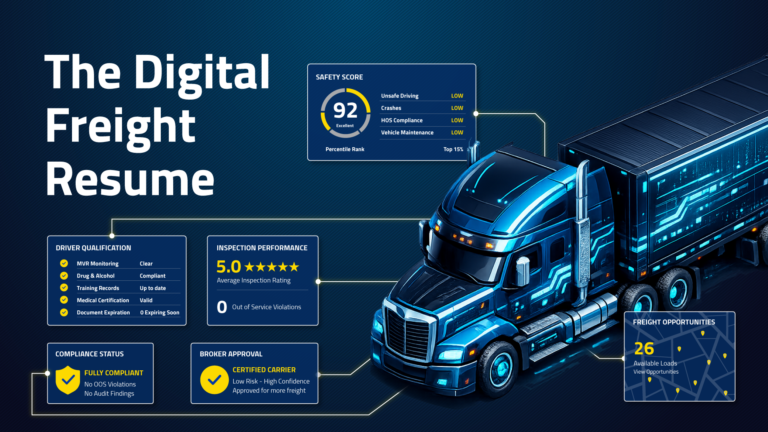
Your Safety Data is Now Your Resume for Freight
TL;DR: The Supreme Court’s Montgomery v. Caribe Transport ruling has changed how brokers evaluate carriers, putting safety performance and compliance under greater scrutiny…

AI & RPA For The Transportation Industry Power EBE’s FY25 Revenue Increase
EAST MOLINE, IL – EBE Technologies, the leading provider of enterprise Artificial Intelligence (AI) and Robotic Process Automation (RPA) developed for the…
Creating a Truck Driver Retention and Engagement Program
A 2023 survey by the NPTC estimates the average cost of driver turnover is $9,748. During a freight recession, it’s vital for…
Reading about it’s the easy part.
If something here describes your operation, we’ll show you what it looks like fixed, using your own volumes rather than an example.