Your Safety Data is Now Your Resume for Freight
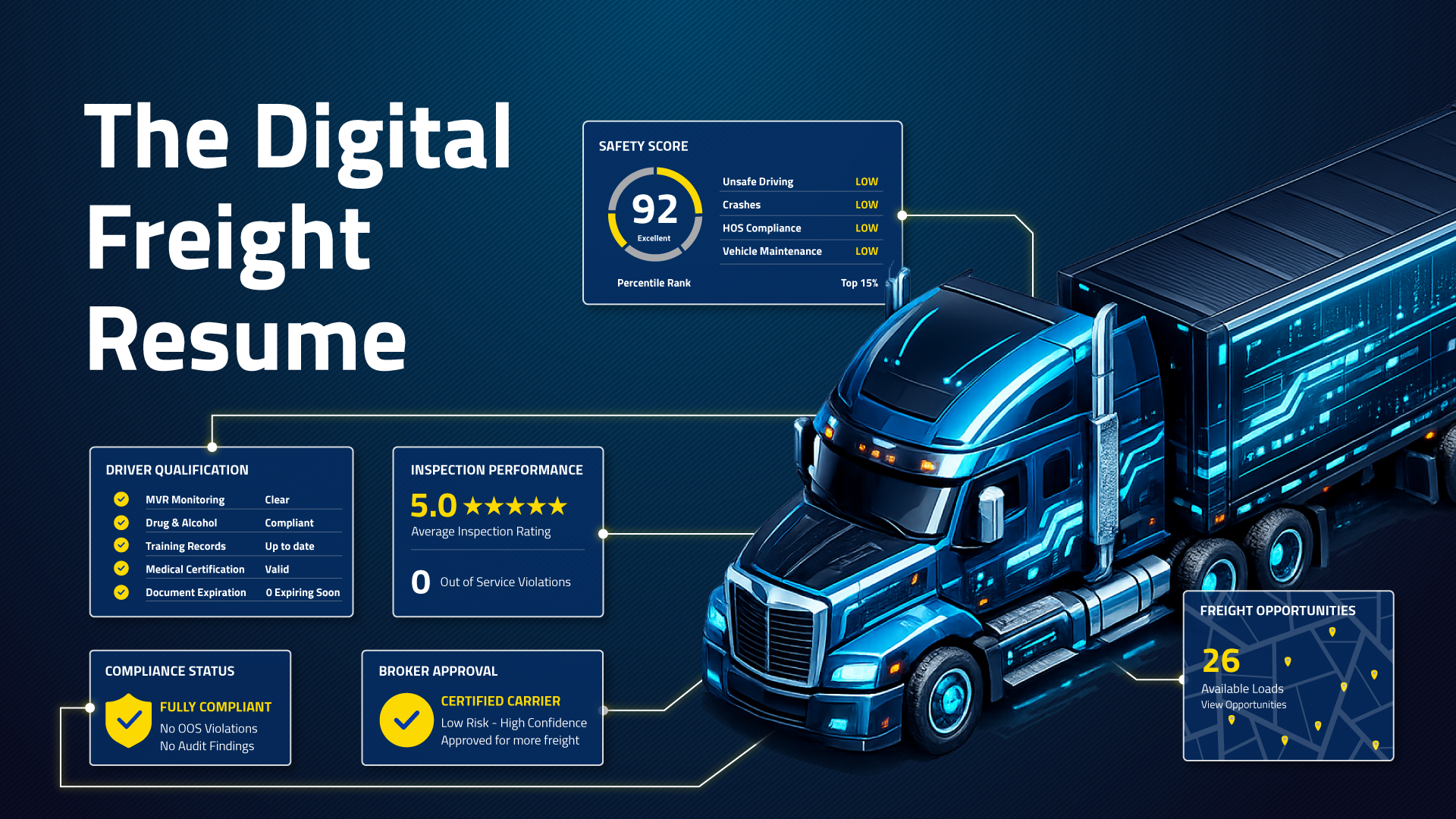
TL;DR: The Supreme Court’s Montgomery v. Caribe Transport ruling has changed how brokers evaluate carriers, putting safety performance and compliance under greater scrutiny than ever before. Carriers can no longer afford to be reactive; they need a clear, real-time view of their safety, compliance, and driver qualification data to prove they’re a low-risk partner. Fleets that automate compliance, connect their safety systems, and address issues before they impact scores will be in a stronger position to protect broker relationships and secure more freight.
The freight industry is experiencing a massive shift. Following the landmark 9-0 Supreme Court ruling in Montgomery v. Caribe Transport II, LLC, the decades-old legal shield that protected freight brokers from negligent hiring claims has seemed to collapse. In response to this new era of direct legal liability, industry giants like C.H. Robinson have already begun proactively tightening their internal safety thresholds and shifting carriers with elevated risk scores into a ‘non-certified status until their BASIC scores improve’.
Logistics professionals assumed safety oversight belonged strictly to federal regulators. However, this ruling places a carrier’s safety profile at the center of its ability to secure freight, maintain broker relationships, and remain competitive.
The New Reality of Carrier Vetting
The days of simple carrier vetting are over. With this new approach, the touch and feel method of broker/carrier vetting will no longer apply. Brokers face greater liability, higher insurance costs, and increased pressure to work with safe, well-documented carriers. At the same time, the amount of carrier data available makes it nearly impossible to separate legitimate safety concerns from bad or incomplete information through manual processes alone. As brokers become more selective, carriers need a fast, reliable way to demonstrate their safety performance and earn access to the freight they want most.
The question for fleets is no longer “Are we safe?” but “Can we instantly prove we are safe to protect our broker partnerships and contract freight?”
Staying Ahead of Safety Obstacles in Real Time
With brokers now monitoring safety scores, carriers can’t afford to wait for a 24-month rolling CSA window to recover from a bad inspection. Staying ahead requires a unified approach to safety:
Close the gaps in driver qualification documentation
By utilizing an automated Driver Qualification File Management (DQFM) system, fleets can gain complete, centralized visibility into their compliance dashboards. Instead of waiting for an audit or a rejected load board credential, EBE’s Driver Qualification File Management (DQFM) solution helps take that off your plate. Instead of hunting down paperwork or waiting for an audit to surface the problem, everything lives in one place. Expiring documents get flagged early, and drivers can upload what’s needed straight from their phone. It gives fleets a simpler way to stay on top of compliance before small issues become significant compliance risks.
Bring your safety tools into one place
Disconnected safety systems slow operations down and create blind spots. To keep scorecards flawless, fleets need to bridge the gap between their cameras, telematics, HOS, MVRs. Each one tells part of the story, but rarely the shows the whole picture. When those systems aren’t connected, it’s easy to miss patterns or catch issues too late. A unified platform pulls everything together so you can actually see what’s happening in real time. That makes it easier to spot risk early, coach drivers with context, and keep your safety performance consistent instead of reactive.
Make compliance work pay for itself
Compliance takes effort, but when it’s managed well it pays back in real terms. Fleets that streamline their workflows can cut administrative workload by up to 31%. When the data is clean and connected, CSA scores improve by as much as 51% and DOT recordable accidents drop by 20%. A clean safety profile means better asset utilization and a stronger position when brokers are deciding who gets the freight.
What Brokers Expect Moving Forward
The value of a clean safety record has shifted. Brokers are applying more scrutiny during onboarding as liability exposure continues to rise, and carriers that can show accurate, current safety performance are better positioned to stay in rotation for freight.
This video provides perspective into the legal breakdown of the Montgomery v. Caribe Transport case, explaining how the Supreme Court’s unanimous decision eliminated the preemption defense and triggered the industry-wide carrier vetting changes seen today.
As brokers place greater emphasis on safety performance, carriers need clear visibility into the factors that influence risk. EBE CORE Fleet Safety centralizes driver qualification, compliance, coaching, camera, and telematics data into one system, giving safety teams a complete view of risk across the operation. With faster access to critical information and proactive risk management tools, CORE helps fleets strengthen safety performance, protect broker relationships, and stay positioned for new freight opportunities.
Schedule a demo to see how EBE CORE Fleet Safety helps fleets identify risk sooner, improve operational visibility, and maintain the safety profile brokers increasingly expect.
More on safety & compliance.
AI & RPA For The Transportation Industry Power EBE’s FY25 Revenue Increase
EAST MOLINE, IL – EBE Technologies, the leading provider of enterprise Artificial Intelligence (AI) and Robotic Process Automation (RPA) developed for the…

Creating a Truck Driver Retention and Engagement Program
A 2023 survey by the NPTC estimates the average cost of driver turnover is $9,748. During a freight recession, it’s vital for…
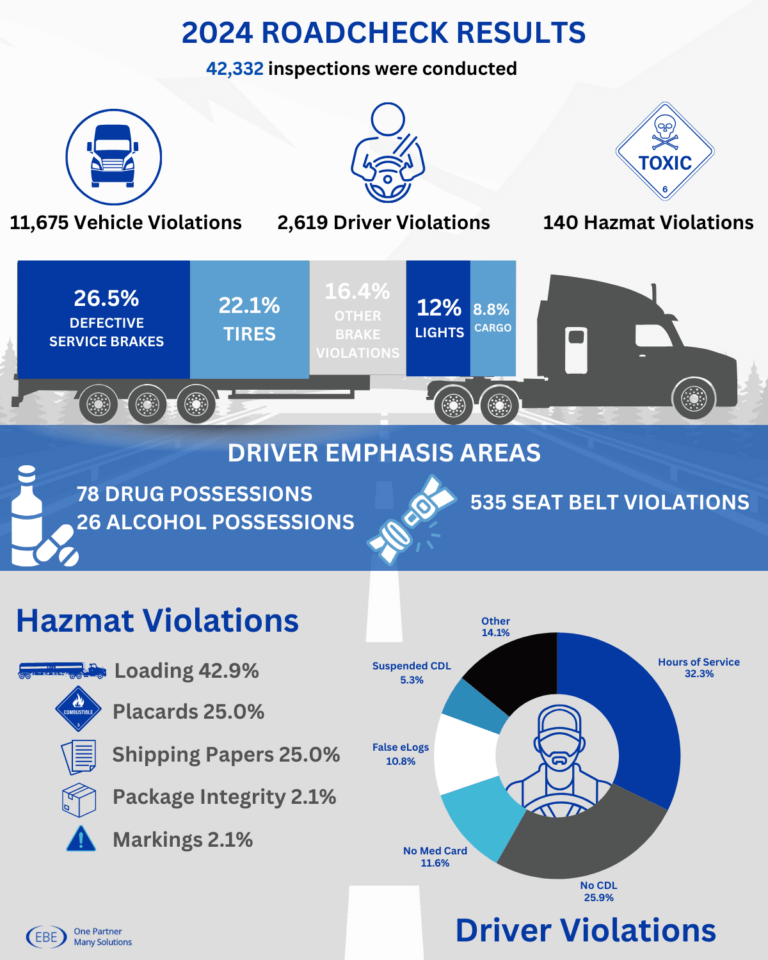
CVSA RoadCheck 2024 Results
The Commercial Vehicle Safety Alliance (CVSA) has released the results of RoadCheck 2024. Each year, the CVSA conducts roadside inspections in Canada,…
Reading about it’s the easy part.
If something here describes your operation, we’ll show you what it looks like fixed, using your own volumes rather than an example.