Every disputed claim starts as a photo nobody checked.
Your drivers already capture the evidence your customers need. Adaptive Capture™ validates it in real time, while they’re still onsite and problems still cost seconds, not claims.
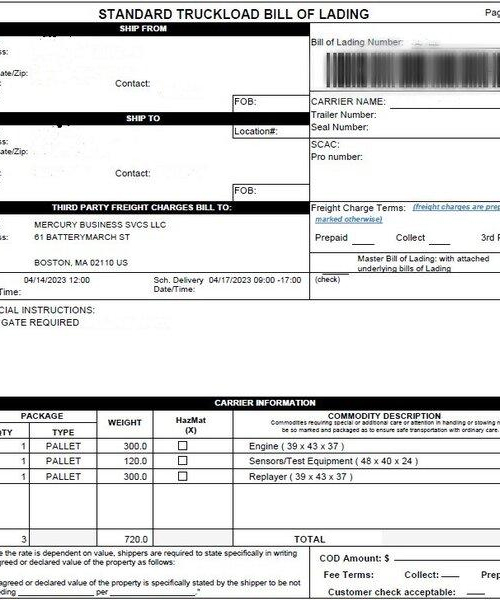
// ILLUSTRATIVE VIEW OF ONE SHIPMENT'S EVIDENCE REQUIREMENTS
The correction costs 10 seconds here. It costs a claim later.
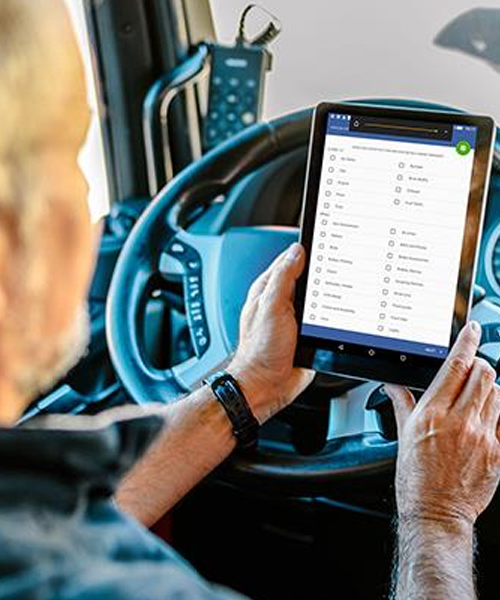
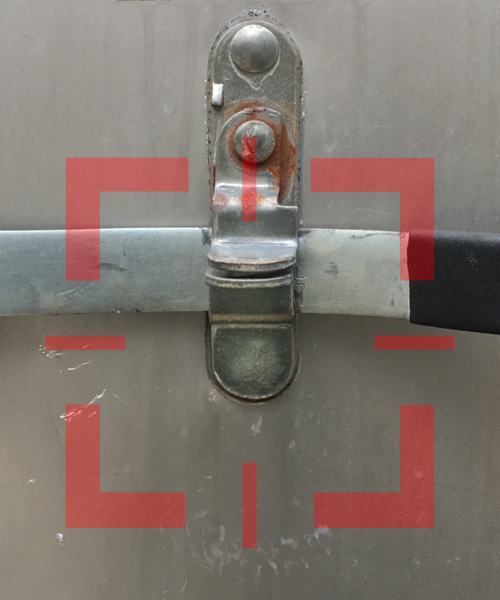
Adaptive Capture™ pulls the requirements for that specific load out of your TMS, prompts the driver for what's needed, and checks what comes back. When something is missing or wrong, the driver hears about it while they are still standing next to the trailer.
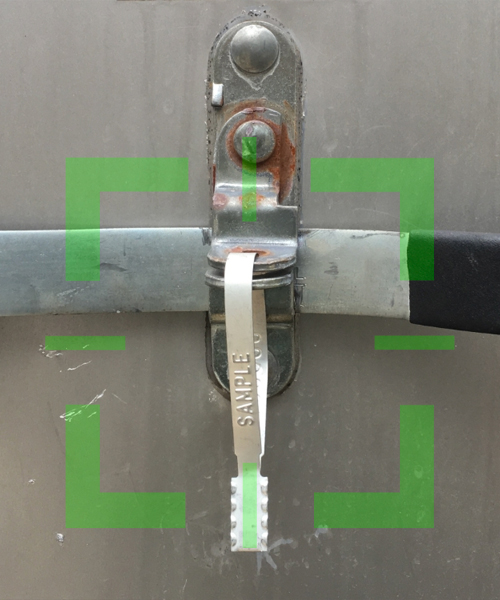
Ready.
Every requirement verified before it becomes a claim.
The same shipment, run twice. Above, the requirements get checked after the work is done. Below, they get checked before it begins. The difference is not the damage — it is whether you can show what condition the freight was in.
Photos taken. Nothing verified.
Gaps in the record stay invisible.
Damage noted. Evidence incomplete.
Missing images surface days later.
No proof of condition. The carrier pays.
Dispatch rules prompt the required photos at origin, and the evidence is validated before the truck rolls.
A time-stamped, pre-validated record of condition is already on file and already attached to the load.
A dispute at the destination is answered on the spot with the origin record, before it becomes a claim.
Images arrive pre-sorted and pre-validated, filed against the shipment in your TMS. Nobody reviews them.
The evidence was there. The back office never had to deal with it.
You stop paying for things you can't prove.
A carrier's exposure on a disputed claim usually isn't the damage. It's the inability to show what condition the freight was in when it was picked up. Same with a delayed invoice, a chargeback, a scorecard hit. The cost sits in the gap between what happened and what you can evidence — and that gap closes at the dock or not at all.
A complete execution timeline attached to the shipment means the adjuster stops hunting across three systems for a photograph somebody may or may not have taken.
Missing customer-required documentation is a common reason a delivered load sits unbilled. Validating it at delivery removes that exception before it reaches billing.
Evidence is classified and matched to the load at the point of capture, so your team reviews exceptions rather than every image a driver submitted.
They're told immediately whether they did it right. That removes the return trip, the follow-up call, and the argument about a photo taken six days ago.
evidence review
requirements
investigation time
providers run EBE
Six departments, one shipment record.
Validated evidence isn't a documentation asset. It's the thing five or six different teams go looking for on a bad day, usually in five or six different places.
Claims
An adjuster needs to know what happened, when, and whether the shipment was handled the way it was supposed to be. A complete execution timeline tied to the load answers that without a search.
- Freight condition at pickup and delivery
- Overages, shortages and damages
- Equipment condition and seal verification
- Chain-of-custody events in sequence
Invoicing & Receivables
A delivered load that's missing customer-required documentation doesn't get billed. Validating the requirement at delivery takes that exception out of the billing queue entirely.
- Proof of delivery confirmed onsite
- Customer-required evidence validated
- Fewer documentation exceptions
- Shorter delivery-to-invoice time
Safety & Compliance
Demonstrating that inspections, securement and customer procedures were completed — with an auditable record tied to the shipment, the driver, the equipment and the location.
- Inspection and securement evidence
- Equipment condition on record
- Tied to driver, unit and stop
- Auditable without assembly
Customer Service
When a customer calls about a delivery, the answer is in the shipment record rather than in somebody's inbox, a mobile device, or an image repository nobody has indexed.
- Delivery images on the load
- Damage records where you'd look
- Seal and condition verification
- Faster responses, fewer internal searches
Operations
Whether required shipment tasks were completed, visible while the load is still moving. This is EBE's work-by-exception approach applied at the point of execution rather than in the back office.
- Real-time evidence validation
- Exception-based review only
- Missing requirements identified automatically
- Problems corrected before departure
Audit Readiness
Customer audits, insurance reviews and internal compliance checks all ask the same question in different words: can you show it. The record is built as the work happens.
- Evidence attached to the transaction
- Timestamped and location-tagged
- No retrospective assembly
- Defensible when it matters
Hogan Transportation, in production.
Hogan deployed Adaptive Capture™ inside their existing mobile communications workflow to validate customer-required evidence during vehicle transportation, where condition verification decides whether a claim happens at all. Drivers didn't change how they work.
EBE’s Adaptive Capture™ is seamlessly enabled in our mobile comm workflow and ensures our drivers capture the images our customers require. We have eliminated claims, service failures, and removed driver frustration. Within a minute of submitting the images, the driver receives confirmation they completed their requirements correctly.
Shipment-related claims removed within the supported workflow.
Related service failures eliminated alongside the claims.
Reduced administrative workload across the affected teams.
Faster customer documentation and improved scorecard performance.
Nothing gets replaced and drivers don't retrain.
Adaptive Capture™ uses shipment context that already exists in your transportation systems and returns validated evidence to the applications your people and customers already open. It runs on top of SHIPSMobile™, or on top of the mobile capture and mobile communications platform you already have.
















Live in production with McLeod, Trimble TMW.Suite, TruckMate and Innovative — and designed to work alongside Geotab, Motive, Platform Science and Trimble on the driver side.
Ask about your stack →The Digital Workforce Playbook
How transportation companies put automation to work in the back office — where the repetitive handling actually sits, what to automate first, and how to tell whether it worked. Written for the operator, not the software buyer.
Download the playbook →
The four questions we get on every first call.
Asked and answered here rather than in week three of an evaluation.
Do we need SHIPSMobile™ to run this?
Not necessarily. Adaptive Capture™ is most often added onto SHIPSMobile™, but it can run on top of a mobile capture and mobile communications platform you already have. What it needs is a driver workflow to sit inside and shipment context to validate against — not a particular app.
What exactly does it check?
Whatever that shipment requires, defined by you. Carriers configure it around the evidence their customers actually ask for — freight and equipment condition, securement, seals, inspections, proof of delivery, chain of custody — and around new requirements as customers introduce them. The requirements come from the load, so a customer with unusual demands doesn't become a manual process.
Will this slow our drivers down?
It runs inside the workflow they already use, and the prompts appear at the stop where the evidence is needed. The time it adds is the retake — and that retake replaces a follow-up call, a return trip, or a claim argued months later without a photograph.
Do we have to replace our TMS?
No. Adaptive Capture™ is live in production with McLeod, Trimble TMW.Suite, TruckMate and Innovative, and connects through open APIs to telematics, imaging, customer portals and billing systems. It adds a layer of validation across what you already run.
Something we didn't cover? Ask it before you commit to a meeting.
Ask us directly →Bring us the last claim you lost.
The one where the photograph was missing, or unusable, or attached to the wrong load. We'll show you where Adaptive Capture™ would have stopped it — at the dock, before the driver pulled out.